Aurora planning · 6 min read · Updated August 2026
Why the Northern Lights Were Disappointing (And What to Do Differently)
You weren't unlucky and you aren't ungrateful. A handful of ordinary things decide whether a night up north leaves you moved or flat — and most of them are decided before you travel.
Most disappointing aurora nights were settled weeks earlier, by the number of nights booked and the picture already in your head.
It is one of the most searched, least written-about things in this whole subject: people go north, they see the northern lights, and they come home quietly deflated. Then they feel bad about feeling deflated, because the whole trip cost a lot of money and everyone at home wants to hear that it was magical.
You were not ungrateful. In most cases you were not even unlucky. Something specific went wrong, and it is almost always one of four things — three of which you can plan around next time.
This post has no upsell in it. We do not sell trips, and we are not going to tell you that you simply needed a better tour.
Cause 1: the picture in your head came from a camera
This is the big one, and it is nobody’s fault.
Almost every aurora image you have ever seen — the ones on the brochure, on the tour operator’s homepage, on the Instagram post that made you book — is a long exposure. The camera’s sensor sat there collecting light for several seconds. Your eye cannot do that. It refreshes constantly and it sees the night through rods, the light-sensitive cells that work brilliantly in the dark and are very poor at colour.
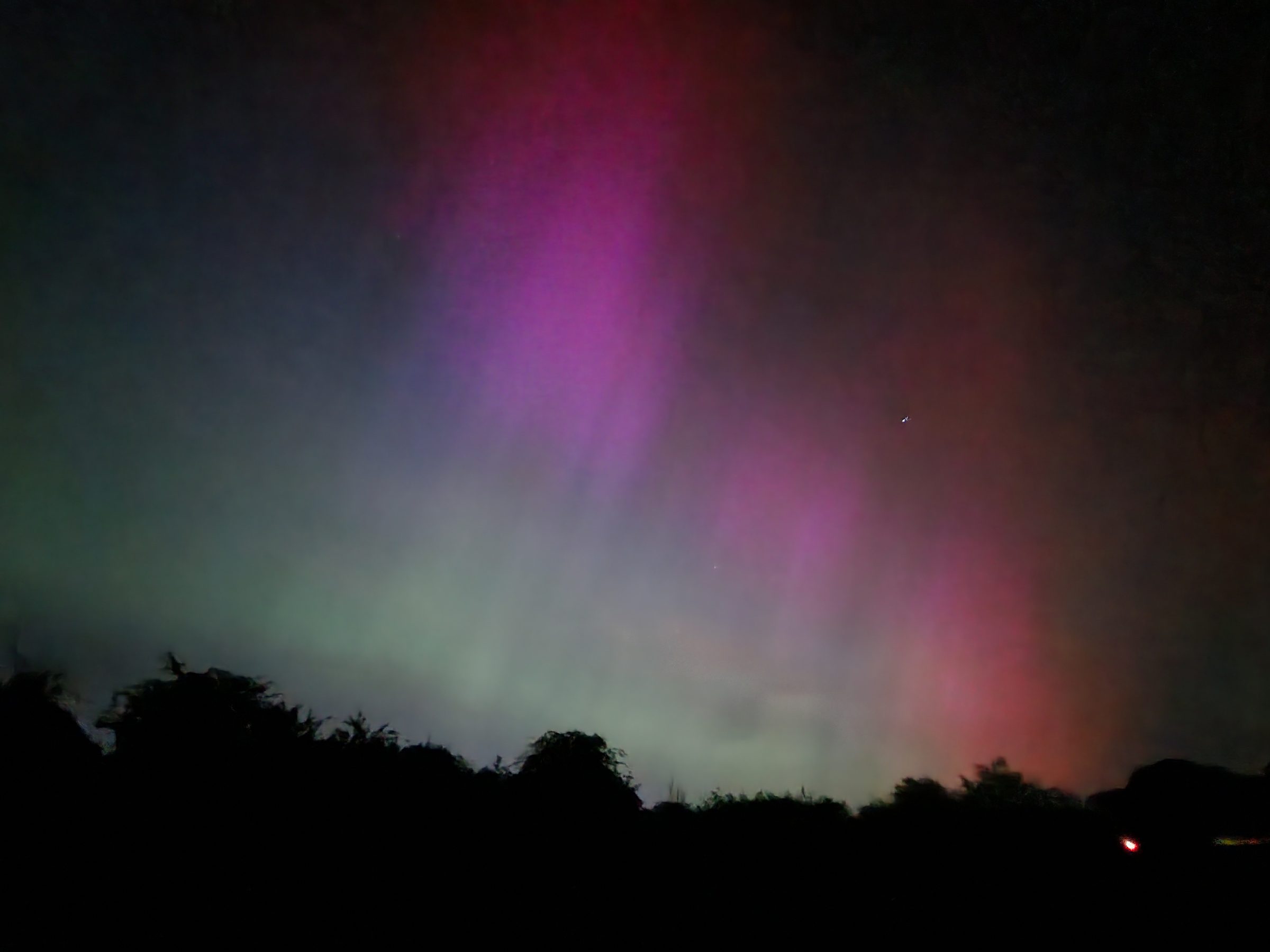
So the sky the camera records and the sky you stand under are genuinely two different images. A modern phone will happily show you a vivid green curtain while your own eyes are reporting a pale grey-white arc that you had to be told was the aurora.
That gap is the single most common source of disappointment, and it is entirely avoidable — by knowing about it beforehand. We have written the physiology out properly in what the aurora really looks like to the naked eye. The line worth carrying north with you is this: a faint aurora is a moving thing first and a coloured thing second. If you go out looking for the photograph, you will stand underneath a real aurora and not recognise it. If you go out looking for movement — a slow drift, a shimmer, a band that was not there a minute ago — you will spot it, and it will land very differently.
What to do differently: look at a few honest naked-eye descriptions before you travel, not more brochure photographs. Then, on the night, give your eyes a proper fifteen minutes to adjust with your phone screen off, and watch for motion rather than colour.
Cause 2: cloud
Cloud is the reason you can do least about on the night and the most about in the planning.
The aurora happens roughly a hundred kilometres up, far above the weather. A cloud layer is an opaque lid: a spectacular geomagnetic storm behind thick cloud is nothing to see at all. This is why an alert that fires on solar activity alone can send you out into a night where seeing anything was never physically possible — the storm was real, your view of it was not. We set that argument out in full in why clear skies matter more than solar hype.
If your trip was clouded out, no forecast, guide or app could have conjured a view. What planning changes is how many chances you get at a clear sky, and how mobile you are when one appears.
What to do differently: treat cloud as a planning variable, not a night-of variable. That means more nights (see below), and it means favouring places where clear sky is more likely or more escapable — inland rather than coastal, or somewhere you can drive out from under a front.
Cause 3: you only had one or two nights
This is the cause people find hardest to hear, because it is usually a budget decision made months earlier.
Every aurora night is a separate roll. Darkness, cloud, moon and solar activity have to line up at the same time, in the same place. On any single night, a lot of things have to go right at once. Book one night and you have one chance for all of them to align. Book four and you have four independent chances — and, just as importantly, the freedom to write off a bad night without it ruining the trip.
We are not going to put a number on it, because we do not have the calibration data to state odds honestly and we are not going to invent one. But the direction is not in dispute: more nights in a dark-sky place beats a better tour on a single night, almost every time.
What to do differently: if the choice is between a smarter package for two nights and a plainer one for five, take the five. Nights are the thing you are actually buying.
Cause 4: you went out on a night that was never going to work
Sometimes the trip did include several nights and the disappointment was still real, because the outings happened on nights when the gates were shut.
There is a structural reason for this, and it is not anyone behaving badly. A tour that leaves at 18:00 was scheduled long before anyone knew what the sky would do. It goes when it goes. And most consumer aurora alerts key off one number — geomagnetic activity, usually quoted as Kp — which tells you how energetic the display is and nothing whatsoever about whether you can see it. A high number under total cloud, in twilight, or with a full moon overhead still fires the alert.
That is how you end up standing in the cold at minus fifteen with a phone that said tonight was the night.
The honest alternative is a forecast that treats darkness and cloud as hard gates rather than as ingredients in an average — where “no” is a real answer, not a low number. How to see the northern lights without wasting a night lists the seven factors in full: darkness, clear sky, moonlight, solar activity, season, location and patience.
What to do differently: check the gates yourself before you commit an evening — is it properly dark, is the sky clear, how bright is the moon — and be willing to skip a scheduled outing and go out on a better night instead.
The quieter fifth cause: you left too early
Worth naming, because it is common and it costs nothing to fix. The aurora pulses. It can sit as a dull grey band for forty minutes and then, without warning, brighten and start moving. Most people who describe an unforgettable display waited longer than was comfortable. Most people who describe a flat one went back to the minibus at the first lull.
What a good aurora night actually feels like
Not like the photograph. Better in one way and worse in another.
Worse: the colour is thinner, the greens quieter, and the pinks and purples that a camera picks up may not reach your eyes at all unless the display is strong.
Better: it moves. Photographs cannot show you that a curtain drifts, folds and re-forms, or that a faint band can suddenly race across the whole sky in a few seconds. That is the part people remember years later, and it is the part no image has ever conveyed.
Go looking for that, and a “modest” aurora stops being a disappointment.
The honest summary
- The camera set your expectation. Reset it before you travel, not after.
- Cloud beats everything. Buy more nights and more room to move.
- One or two nights is a coin toss. Four or five is a plan.
- An alert built on solar activity alone will send you out on nights you cannot see anything. Gate on darkness and cloud first.
- Stay out longer than feels reasonable.
The northern lights are never guaranteed — not by us, not by anyone, on any trip at any price. What you can do is stop spending your nights on the ones that were never going to work. Our free Tonight Score is built exactly that way: darkness and cloud as hard gates, moon and activity weighed honestly, one plain go or no-go.
If the answer is that you simply need more nights under a darker, clearer sky, that is a planning question rather than a forecasting one. Jo plans Arctic journeys around exactly that — for instance Swedish Lapland and Abisko, chosen for its sheltered, unusually clear skies. True Frontier In Action does not sell or book travel. With your consent we pass your enquiry to Jo Sehgal, who is a specialist at an ATOL-protected travel company and handles any booking and its financial protection herself.
Above: A soft, diffuse pink and pale green aurora glow low over a dark hedgerow, far fainter than a typical aurora photograph..
Ready to put it into practice?
Check tonight's honest forecast for free, or plan a journey to where the aurora lives.