Start here · 4 min read · Updated June 2026
How to See the Northern Lights Without Wasting a Night
Why honest go/no-go beats the apps that cry wolf — and the seven things that decide whether tonight is worth the cold
A forecast that says "go" only when you could actually see the lights is worth a hundred that ping on a hunch.
Most people who chase the northern lights and miss them didn’t get unlucky. They got a bad alert. They drove an hour into the cold because an app buzzed about “high solar activity”, stood under a bright, cloudy sky for forty minutes, and went home cold and disappointed. The aurora was never going to show — not because the sun was quiet, but because the conditions on the ground made it impossible to see.
This guide is about avoiding exactly that wasted night. The aurora is never guaranteed; nobody honest will tell you otherwise. But you can stack the odds heavily in your favour, and you can stop trusting forecasts that get your hopes up for nothing.
Why most aurora apps cry wolf
The common apps key off one number: geomagnetic activity, usually expressed as Kp. When that number climbs, they fire an alert. The trouble is that solar activity is only one ingredient. A strong reading under a cloudy sky, or during summer’s midnight sun, means you will see precisely nothing.
Apps that ping on solar activity alone are technically “right” and practically useless. Worse, they train you to ignore them — after the third false alarm, you stop trusting the buzz, and then you miss the night it really mattered. That’s the “cry wolf” problem, and it’s the whole reason a gated go/no-go is better than a raw number.
A good forecast doesn’t just tell you the sun is active. It tells you whether you could actually see anything if you stepped outside.
The seven things that actually matter
Seeing the aurora is the result of several factors lining up at once. Here’s what each one does:
- Darkness. This is non-negotiable. The aurora is faint; daylight or deep twilight will wash it out completely. You need proper dark sky, which is why these are autumn and winter pursuits, not summer ones.
- Clear sky. Cloud is an opaque lid. It doesn’t matter how strong the display is overhead if there’s a blanket of grey between you and it. Cloud cover is the single most common reason a “great” night produces nothing.
- Moonlight. A bright full moon acts like mild light pollution, dimming faint aurora. It won’t ruin a strong show, but on a marginal night it tips you from “maybe” to “no”.
- Solar activity. This is the engine — the geomagnetic energy that drives the display. It matters enormously, but it’s necessary, not sufficient. High activity behind cloud is still nothing.
- Season. The dark months — roughly autumn through early spring — give you the long nights you need. The deeper into winter and the further north you are, the more dark hours you have to work with.
- Location. The further north you go, the lower the bar for solar activity and the more often the aurora sits overhead rather than low on the horizon. Latitude is the closest thing there is to a cheat code.
- Patience. Even on a strong, clear, dark night, the aurora pulses and fades. It can be quiet for an hour and then erupt. The people who see the best displays are usually the ones who waited a little longer than felt comfortable.
Why a gated go/no-go beats a Kp number
Here’s the honest-forecast idea in one sentence: a “go” should mean you could genuinely see the lights tonight — not just that the sun is busy.
That’s why a single, fused score is more trustworthy than a raw Kp figure. The right approach treats darkness and clear sky as hard gates: if it isn’t properly dark, or the sky is socked in with cloud, the answer is “no” no matter how high the solar activity climbs. (It’s worth understanding why clear skies matter more than solar hype before you trust any big number.) Only when those gates are passed does the score weigh the moon and the geomagnetic energy to give you a real verdict.
The result is a forecast that earns your trust. When it says “go”, it’s worth putting your boots on. When it says “no”, you can stay warm with a clear conscience, knowing you didn’t miss anything. That’s the opposite of crying wolf — and it’s why a gated score saves you the wasted nights.
It also reframes what a quiet night means. A “no” isn’t failure; it’s information. It’s the difference between three cold, fruitless drives and one well-timed one.
What this looks like in practice
- Check the verdict for tonight, where you are, before you commit to anything.
- If it’s a “no”, don’t force it — a faint aurora behind cloud is still invisible.
- If it’s a “go”, dress warmer than you think you need to, get away from town lights, and give it time.
- Look north, let your eyes adjust for a good fifteen minutes, and don’t pack up at the first lull.
The honest next step
If you want to see the northern lights without wasting a night, start by checking an honest forecast rather than a hopeful one. The free Tonight Score fuses darkness, cloud, moon and solar activity into a single go/no-go, and only says “go” when you could actually see the lights — no ads, no tracking, no crying wolf.
And if you’re serious about the best possible odds, the answer is simple: go north. Higher latitudes mean longer dark nights, a lower bar for activity, and the aurora more often overhead. When you’re ready to plan a proper trip into the Arctic, Jo runs the journeys to Norway and can help you sort the details. Check tonight’s score first — then start dreaming about going north.
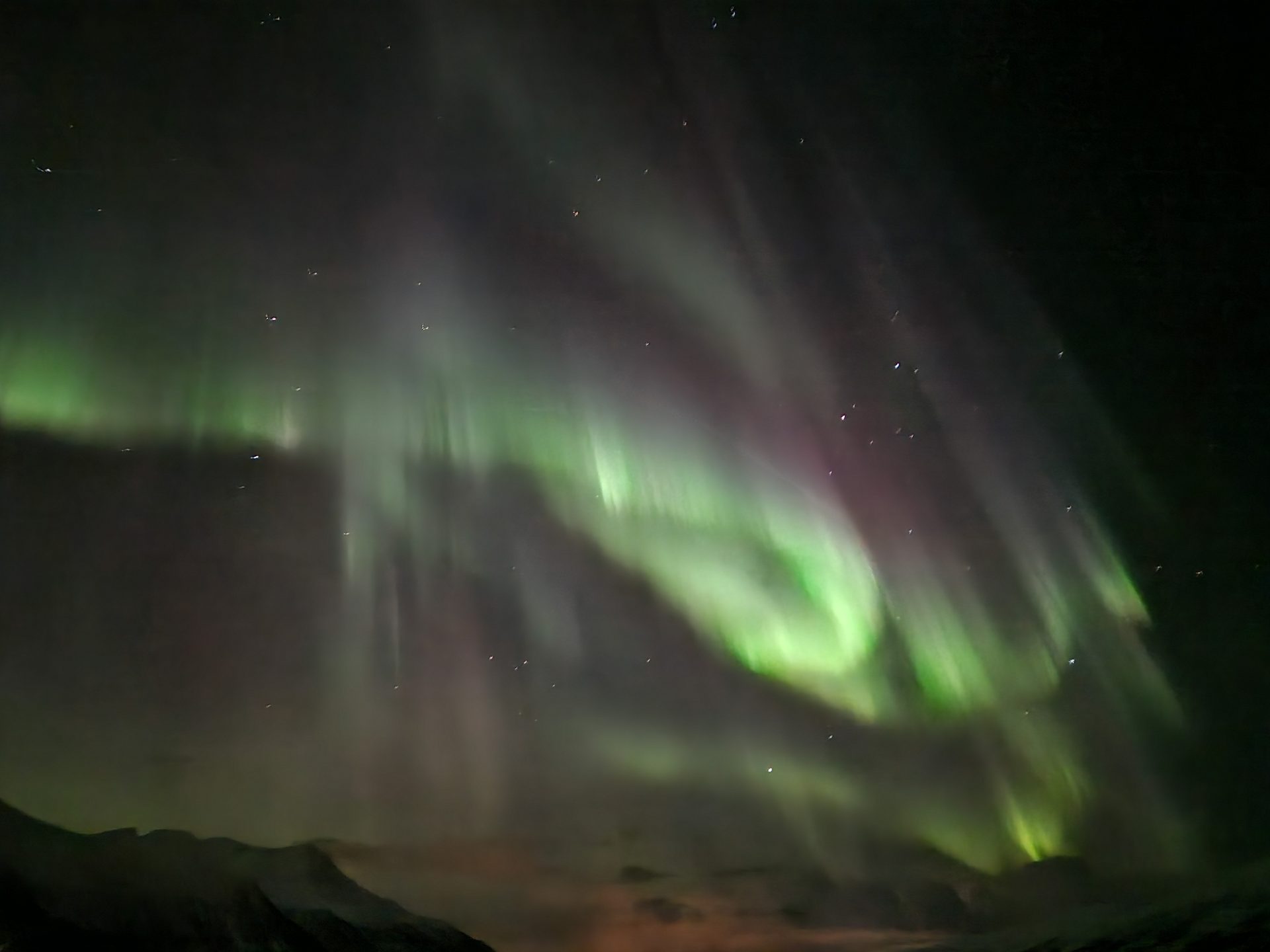
Above: Vivid green aurora rays streaming down across the night sky above a dark mountain horizon..
Ready to put it into practice?
Check tonight's honest forecast for free, or plan a journey to where the aurora lives.