Aurora planning · 4 min read · Updated June 2026
Why Clear Skies Matter More Than Solar Hype
A geomagnetic storm behind thick cloud is nothing to see. Why darkness, cloud and the moon decide your night — not solar hype
The sky doesn't care how strong the storm is if you can't see through it.
There’s a particular kind of disappointment that aurora chasers know well. The alerts light up your phone — “HUGE aurora tonight!”, “Strongest storm in years!” — so you pull on your coat, drive somewhere dark, tip your head back, and see a flat grey ceiling of cloud. The storm is real. It’s roaring away up there at a hundred kilometres’ altitude. You just can’t see a thing.
This is the single most important idea behind everything we do: a spectacular geomagnetic storm behind thick cloud is nothing to see. The northern lights are a viewing experience first and a physics event second. If the conditions on the ground between you and the sky aren’t right, the strength of the storm simply doesn’t matter.
The hard gates: darkness, cloud and the moon
Most aurora alerts measure one thing — geomagnetic activity, often quoted as the Kp index. That number tells you how energetic the storm is. It tells you nothing about whether you will see it. Three things sit between the lights and your eyes, and each one is a hard gate, not a slider.
- Darkness. You need a properly dark sky. In an Arctic summer, the sun barely sets and there is no aurora season at all, however strong the solar activity. No darkness, no show — full stop.
- Cloud. The aurora happens far above the weather. A solid deck of cloud is an opaque lid. No amount of solar energy burns through it.
- A bright moon. A full moon floods the sky with light and washes out all but the most intense displays. It won’t cancel a great night, but it raises the bar considerably.
The reason we call these “hard gates” is that they can’t be overridden. You can’t trade a higher Kp for a clearer sky. A Kp of 7 under cloud is worth less than a Kp of 3 under crisp, dark, moonless conditions. The sky doesn’t care how strong the storm is if you can’t see through it.
Why the viral alerts mislead
The “huge aurora tonight!” posts go viral precisely because they’re simple and exciting. They take one number, the geomagnetic forecast, and turn it into a promise. But that promise quietly assumes everything else is perfect — and on most nights, in most places, it isn’t.
This matters more than it first appears. Every time someone is told to expect a show and gets cloud instead, a little trust is lost. Cry wolf often enough and people stop bothering to look, which means they miss the genuinely good nights too. An honest forecast has to be willing to say “not tonight” far more often than it says “go” — otherwise the word “go” stops meaning anything.
So we built the Tonight Score around the gates rather than around the hype. It fuses geomagnetic activity with darkness, cloud and moon into a single go/no-go. Crucially, darkness and cloud are treated as hard gates: if the sky above you will be bright or overcast, the score won’t tell you to head out, no matter how lively the sun is. It only says “go” when you could actually see the lights. That’s the whole point.
How to actually improve your odds
If clear skies are the thing that really decides your night, then chasing the aurora is, in large part, chasing clear skies. Here’s how to tilt the odds in your favour.
- Build in mobility. Cloud is patchy and it moves. The single biggest advantage is the ability to relocate to a gap. On land that might mean driving an hour to the other side of a weather front — one reason a road-connected base like Tromsø can outperform a more fixed spot. At sea it’s even more powerful — a ship can sail towards clear air, which is exactly why an Arctic voyage can outperform a fixed hotel on a cloudy week.
- Use microclimates. Some places are simply cloudier than others. Abisko in Swedish Lapland has earned its clear-sky reputation thanks to a “blue hole” effect, where the surrounding mountains help keep the sky open more often than nearby areas. Choosing a spot with the local weather in its favour does quiet, persistent work for you across a whole trip.
- Check the real cloud forecast. Before you commit to a night out, look at an actual cloud-cover forecast for your spot and the hours you’ll be out — not just the headline Kp number. A modest storm under a clear sky beats a strong one under cloud, every time.
- Give yourself nights, not a night. Aurora viewing rewards patience. The more dark, potentially clear nights you build into a plan, the more chances the weather has to break your way.
What to do tonight
The honest truth is that no one can guarantee the aurora. What we can do is stop pretending the storm is the whole story and start respecting the gates that actually decide whether you’ll see anything.
If you want to know whether tonight is worth the cold, check the free Tonight Score in the app — no ads, no tracking, just a straight go/no-go based on darkness, cloud, moon and activity together. And if you’re thinking bigger — a proper trip built around mobility and clear-sky country, with the freedom to chase the gaps — that’s worth planning carefully. We’re not a travel agent and we don’t book travel ourselves, but we’re happy to point you to Jo, who plans Arctic journeys to Norway with exactly this in mind. Either way: chase the clear sky, and let the hype look after itself.
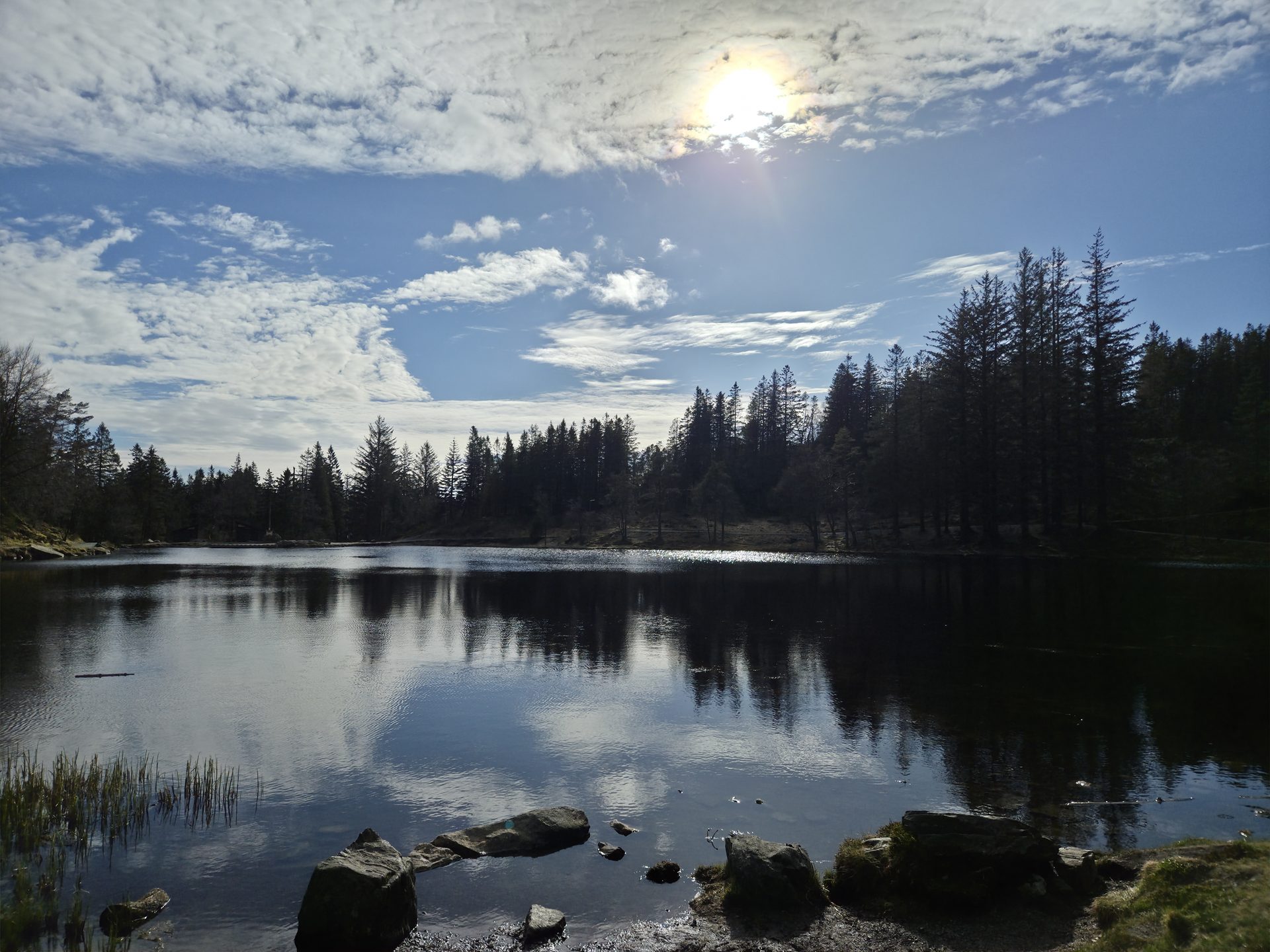
Above: Low golden sun over a glassy, clear-skied fjord with mountains mirrored in still water..
Ready to put it into practice?
Check tonight's honest forecast for free, or plan a journey to where the aurora lives.