Aurora planning · 4 min read · Updated July 2026
Coastal Steamer vs Expedition Ship for Aurora
Which kind of voyage gives you a better chance — the cozy coastal steamer or the rugged expedition ship?
A coast steamer is like a warm lounge with moving scenery outside the windows. An expedition ship is your ticket into the wild Arctic.
You want to see the aurora from a ship. Good instinct. A vessel in the far north gives you three things that make a real difference: you can move away from cloud, you have open decks to stand on, and the sea gives you unobstructed views in every direction.
But not all ships are built the same. The two main options — the coastal steamer and the expedition ship — offer very different experiences, with very different odds for aurora viewing. Here is how they compare.
What is a coastal steamer?
Along much of Norway’s coastline, the coastal steamer (or kystfartøy) is the main form of transport. You will know the main chain by its bright orange and white hulls. It runs between towns and ports from the southern coast up through the far north, and some of its routes pass right through the auroral zone.
The coastal steamer is not a cruise in the usual sense. It is a working ferry — part of the transport network. But it makes for a rather remarkable way to travel, because every stretch of coastline becomes a window seat, and the aurora season makes it something else again.
What the coastal steamer does for you:
- Cozy warmth. Most vessels have a warm interior — cafés, lounges, panoramic windows overlooking the sea and the mountains. On a cold aurora night, you can stay dry and warm while the lights play overhead.
- Authentic route. You follow the same path that locals and cargo ships have used for generations. It feels real, not staged.
- Stable. Ferries are built for coastal waters, and even in rough weather, they usually handle better than long-distance cruise ships.
- Relaxing. You sit back, watch the fjords unfurl, read a book, drink coffee. The aurora is a bonus.
What you should expect:
- Not purpose-built for aurora watching. There are no planetarium-style roofs, no heated observation decks, no dedicated aurora cameras running live feeds.
- Timetabled. It runs when it runs. You cannot ask it to delay for aurora season.
- Limited deck space. Many vessels have outdoor areas, but they are not massive observation decks.
A coastal steamer is like a warm lounge with moving scenery outside the windows. It is the kind of trip where you might see the aurora, and if you do, it will feel lucky. But it is also one of the most beautiful ways to travel along the Norwegian coast, aurora or not.
Two operators run the classic Bergen–Kirkenes coastal route today: Hurtigruten, the historic line, and Havila Voyages, its newer challenger with quiet battery-hybrid ships. Both sail the route year-round, straight through the aurora season, and Hurtigruten publicises a “Northern Lights Promise” on its longer round voyages — a free follow-up voyage if the aurora never appears on an 11-day-plus sailing. Check the current terms before you lean on any promise like that; the point is simply that the coastal route takes the aurora season seriously.
What is an expedition ship?
An expedition ship is built for the wilder edges of the Arctic. These are vessels that operate in the high north — Svalbard, the Barents Sea, the coast north of Tromsø — and they are designed for rough conditions, shallow drafts, and rocky shorelines. The hulls are reinforced for ice. The decks are rugged. The cabins are smaller but usually comfortable.
What expedition ships do for you:
- Wilderness. You are out where the coast stops and the ice begins. It is stark, open, and utterly unforgettable.
- Expert guides. Expedition ships employ naturalists and scientists who can explain the aurora, the weather, the ecology — often in real time, as if the sky were a classroom.
- Mobility. An expedition ship can drop anchor in a sheltered fjord and let you ashore to watch the lights from the beach. No other vessel can offer that.
- Focus. Some expedition voyages are explicitly aurora-focused — designed, in part, to give you the best chance of seeing the northern lights.
What you should expect:
- Size. These are smaller ships, with fewer cabins and more limited onboard facilities. You are going there for the experience, not the luxury.
- Wild weather. Rough seas are possible. Not every night will be suitable for going on deck.
- Cost. Expedition voyages tend to be more expensive than coastal steamers — sometimes much more.
An expedition ship is your ticket into the true high Arctic. It is built for the kind of voyage where the aurora feels earned — where the cold, the distance, and the silence make the lights feel like something more than a spectacle.
The head-to-head
Here is how they compare on the things that matter most:
| Coastal Steamer | Expedition Ship | |
|---|---|---|
| Aurora visibility | Good (open coast, but limited deck) | Excellent (remote, minimal light pollution) |
| Comfort | High (warm lounges, cafés) | Variable (small cabins, rugged conditions) |
| Wilderness experience | Moderate (coastal villages, fjords) | High (ice, mountains, wildlife) |
| Expert guidance | Basic or minimal | Strong (naturalists, scientists) |
| Cost | Moderate | Higher |
| Best for | Authentic, scenic travel with aurora upside | Adventure, remote viewing, science |
There is a third option, of course, if you prefer land over sea. But this guide is about ships.
Which should you choose?
If you are looking for the best chance of seeing the aurora, the expedition ship wins. You are further north, further from light pollution, with guided nights and the ability to move to the best vantage points. But you are also paying more, and preparing for rougher conditions.
If you want the most beautiful way to travel along the Norwegian coast — with the aurora as a welcome surprise rather than the main event — the coastal steamer is hard to beat. It is calm, it is authentic, and it gives you a chance to watch the sky from a moving window seat.
Either way, you are doing something right. A voyage along the northern Norwegian coast in aurora season is one of the best ways to give yourself good odds of seeing the lights. If you are still weighing when to sail rather than what to sail on, our guide to choosing dates for a 2027 Norway aurora cruise covers the darkness season and how a fixed date narrows which sailings are open to you. And whichever ship you choose, our free Tonight Score gives you a straight go/no-go each evening on deck — it only says “go” when darkness, cloud, moon and solar activity actually line up.
Talk to Jo if you want to discuss which kind of voyage suits you. She plans journeys to Norway and can help you decide whether the coast or the true Arctic is the right choice. True Frontier In Action does not book trips — but Jo does, through an ATOL-protected travel company.
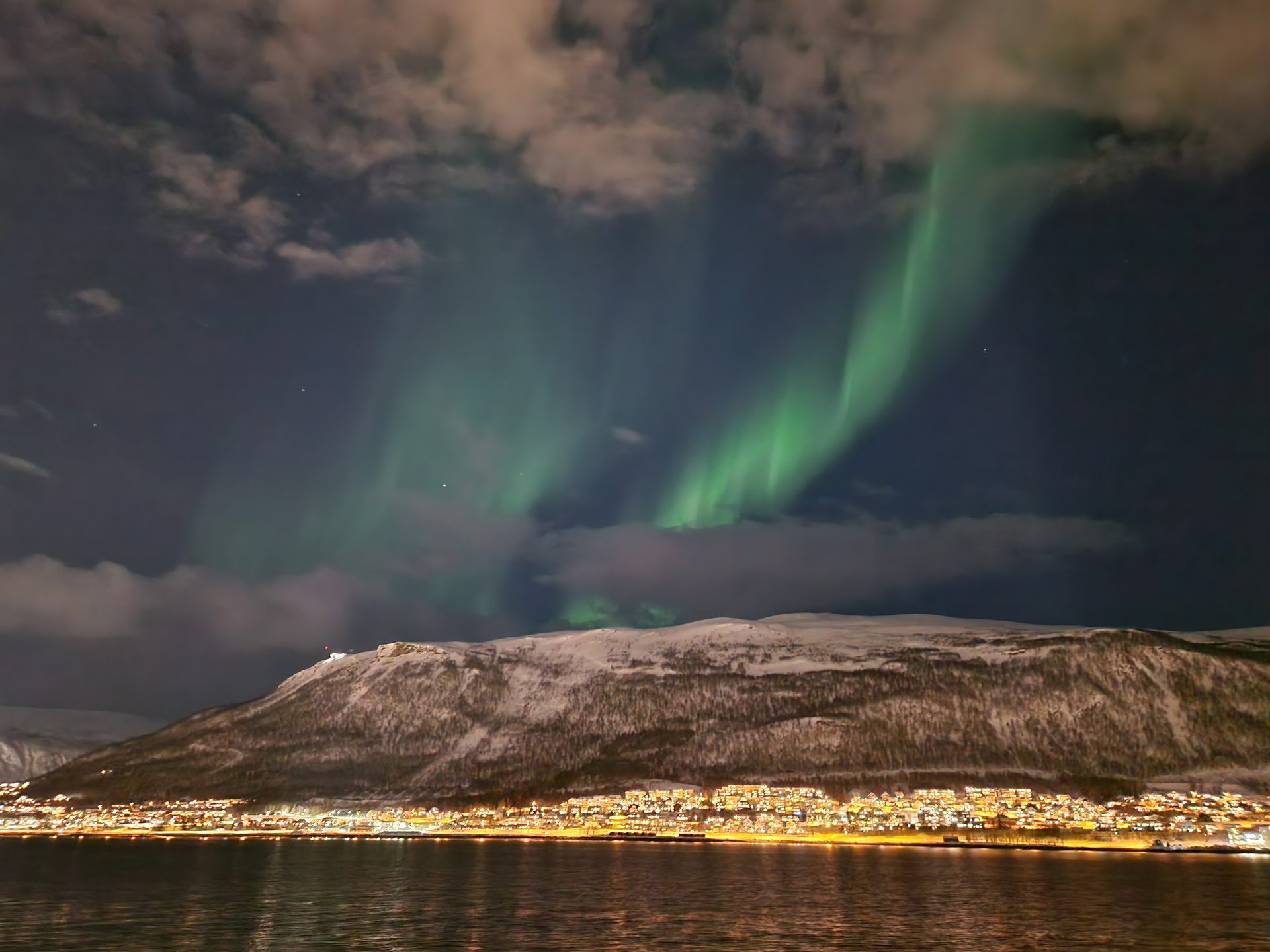
Above: Green aurora over a calm fjord at dusk..
Ready to put it into practice?
Check tonight's honest forecast for free, or plan a journey to where the aurora lives.