Aurora planning · 4 min read · Updated June 2026
What to Pack for a Northern Lights Night
A practical, honest checklist for staying warm, comfortable and ready while you wait for the aurora to show
The aurora keeps its own schedule. The people who see it are usually the ones who stayed out, warm and unbothered, for one more hour.
Chasing the northern lights is mostly an exercise in waiting outdoors, in the cold, in the dark. The display itself can be brief and unpredictable, so the real skill is being comfortable enough to stay out long enough to catch it. Get cold or restless and you’ll pack up at exactly the wrong moment.
This is a practical list for a single night out under a clear, dark Arctic sky. None of it is exotic. The aim is simple: stay warm, stay patient, and be ready when the sky decides to do something.
Start with layers, not one big coat
Warmth comes from trapped air and the ability to adjust, not from a single heavy garment. Standing still in the cold is very different from walking, and you’ll be doing a lot of standing still.
- Base layer — merino or synthetic, top and bottom. It moves moisture away from your skin. Avoid cotton, which holds damp and chills you.
- Mid layer — fleece or a light down jacket to trap warmth.
- Outer layer — a windproof, ideally waterproof shell. Wind is what steals heat fastest on an exposed night.
- Legs — thermal leggings under proper trousers. Cold legs are easy to forget until they’re the thing that sends you indoors.
The point of layering is control. You can shed a layer if you’ve walked to a viewing spot and warmed up, then add it back the moment you stop.
Protect the extremities — this is where the night is won or lost
Hands, feet and face go numb first, and numb is what ends most aurora nights early.
- Feet — insulated, waterproof boots a half-size up, with thick wool socks (and a thin liner sock underneath). Boots that are too tight cut circulation and make you colder.
- Hands — a thin liner glove inside a thick mitten. Mittens beat gloves for warmth. The liner lets you work a camera or phone briefly without bare skin on cold metal.
- Head and face — a warm hat that covers your ears, plus a neck gaiter or balaclava you can pull up over your nose and cheeks.
- Chemical hand and toe warmers — small, cheap, and genuinely transformative on a long night. Bring more than you think you need.
A hot drink and something to sit on
A flask of tea, coffee or hot chocolate does two jobs: it warms you from the inside and gives a cold wait a small ritual to look forward to. Bring more than one round if you can.
Standing for hours is tiring and cold. A foam sit-mat, a folding stool, or even a closed-cell pad keeps you off frozen ground and lets you relax while you watch. Sitting also steadies your neck for looking up.
Pack a few simple snacks — chocolate, nuts, something with sugar. Your body burns through fuel keeping warm, and a quiet energy dip can feel a lot like “time to give up”.
A head-torch with a red mode
A head-torch keeps your hands free for setting up and moving safely over snow and ice. The important detail is a red-light mode.
- Red light preserves your night vision, so faint aurora and stars stay visible to you.
- It also protects everyone else’s night vision and, if you’re photographing, keeps stray white light out of others’ shots.
Switch to red as soon as you’re settled, and keep white light brief and pointed at the ground.
Camera basics, if you want photos
The aurora photographs beautifully, but cold and darkness defeat casual settings. The essentials:
- A tripod. Long exposures are impossible to hold steady by hand.
- Manual mode with a long exposure (often several seconds), a wide aperture, and a raised ISO. Autofocus struggles in the dark, so focus manually on a bright star or distant light.
- A wide, fast lens if you have one — it captures more sky and more light.
- Spare batteries kept warm. Cold drains batteries fast. Keep spares in an inside pocket near your body and swap them in as needed.
- A remote shutter or the camera’s timer to avoid shake when you press the button.
A modern phone in night mode can do surprisingly well too — propped steady on something solid, it’ll often capture more than your eyes can see.
Above all, patience
This is the part no kit can replace. The aurora keeps its own schedule. It can build slowly, fade, then surge again an hour later. The people who see it are usually the ones who stayed out, warm and unbothered, for one more hour.
Set yourself up so the waiting is pleasant rather than a test of endurance. Warm feet, a hot drink, somewhere to sit, no rush. Then look up, let your eyes adjust for a good twenty minutes, and enjoy the dark even if the lights are shy.
Before you head out
Check the conditions honestly first. Clear skies and real darkness matter as much as geomagnetic activity — there’s no point packing if cloud has the sky sewn shut. Our free Tonight Score app fuses geomagnetic activity, darkness, cloud and moon into a single go or no-go, and only says “go” when you could genuinely see the lights. No ads, no tracking.
And if you’re thinking about a proper trip north to stack the odds in your favour, Jo Sehgal plans Arctic journeys to Norway and is the person to talk to. We’re happy to point you her way whenever you’re ready.
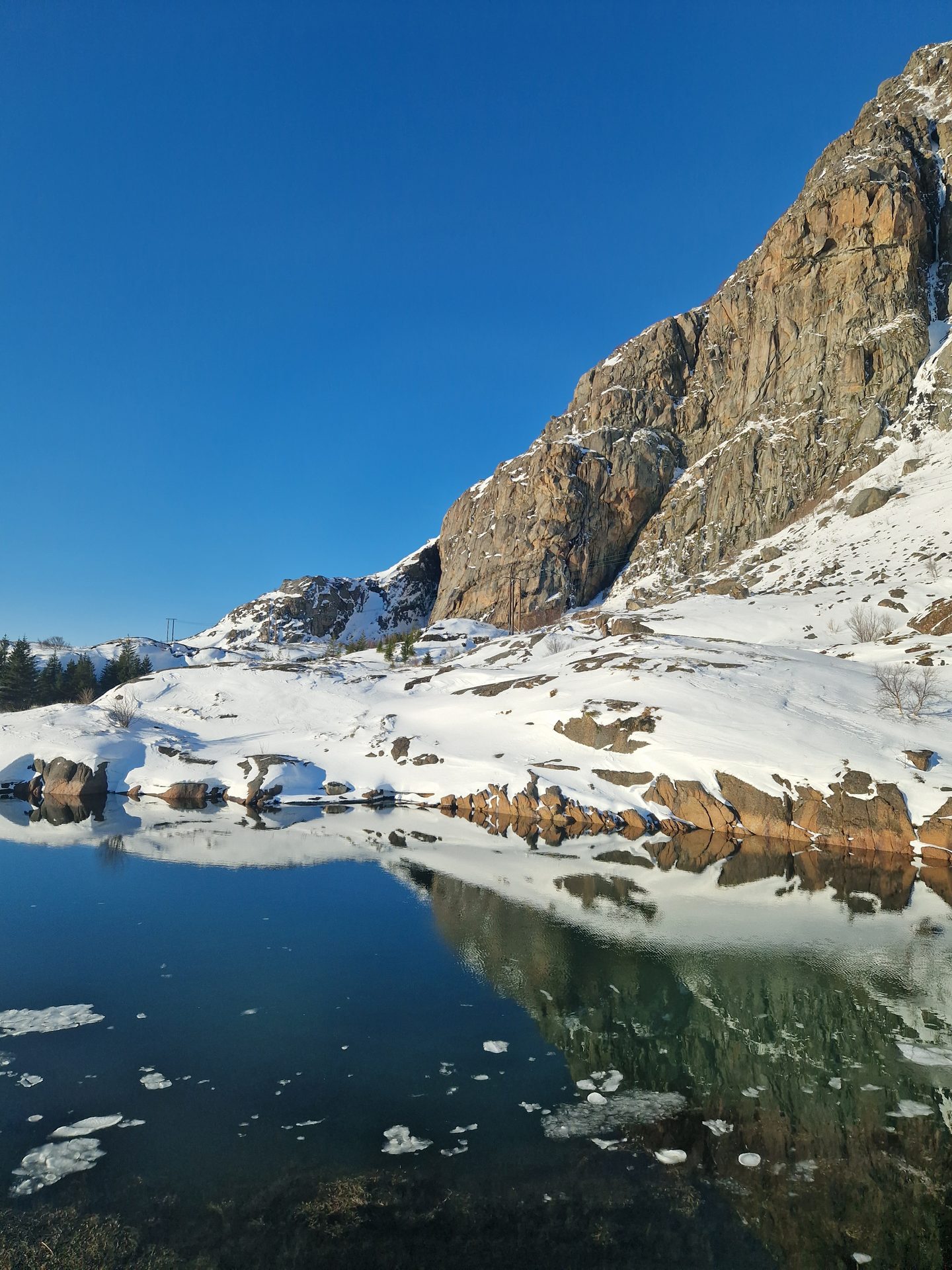
Above: A steep snow-streaked winter peak rising above still water under a clear cold sky..
Ready to put it into practice?
Check tonight's honest forecast for free, or plan a journey to where the aurora lives.