Aurora planning · 4 min read · Updated June 2026
Tromsø, Lofoten or Svalbard: Which Aurora Trip Is Right for You?
A calm, honest comparison of Arctic Norway's three classic aurora bases — and how to pick the one that fits how you like to travel.
The best base is simply the one that matches how you want to travel — and how much effort you want to spend.
Three names come up again and again when people start planning a trip to see the northern lights in Norway: Tromsø, Lofoten and Svalbard. All three sit well inside the auroral zone, and on a clear, active night any of them can deliver. The honest truth is that the aurora itself does not really care which one you choose — it follows the geomagnetic activity, not the postcode. What differs is everything around the lights: how easy the place is to reach, what you’ll be standing in front of, how wild it feels, and how much it costs in money and effort.
So the right question is not “which place has the best aurora?” It’s “which place suits the kind of traveller I am?” Here’s an honest look at each.
Tromsø: the easy first trip
Tromsø is the gateway to the Arctic, and it earns the title. It has an airport with proper connections, a compact and walkable centre, cafés, restaurants and warm places to retreat to when the cold bites. If this is your first aurora trip, or you’re travelling with people who want comfort as well as adventure, Tromsø is hard to beat.
The big practical advantage is mobility. Because Tromsø sits at the hub of a road network, guides can drive you away from cloud and light pollution — and on a marginal night, being able to move is often the difference between seeing something and seeing nothing. Cloud is one of the hard gates on whether the lights are visible at all — more important, in truth, than the solar hype — so the freedom to chase clear sky matters enormously.
Tromsø suits you if:
- It’s your first time and you want the gentlest learning curve
- You value warmth, food and a real town at the end of the night
- You’d rather have flexibility to drive to clearer skies than commit to one fixed spot
The trade-off is that Tromsø is popular, so you won’t have it to yourself, and the scenery, while lovely, is less jaw-dropping than Lofoten’s.
Lofoten: for the photograph of a lifetime
If you’ve seen an aurora image with jagged peaks plunging straight into the sea, or green light reflected over a white-sand beach, there’s a good chance it was taken in Lofoten. This is the place for foregrounds. The mountains are dramatic, the fishing villages are photogenic by daylight, and the combination of sharp peaks and open water gives you compositions the flatter mainland simply can’t.
That reward comes with more effort. Lofoten takes longer to reach, the settlements are smaller and more spread out, and you’ll likely spend real time on the road between locations. Winter weather here can be genuinely changeable, so patience and a few nights’ margin go a long way.
Lofoten suits you if:
- Photography is a real motivation, not an afterthought
- You’ll happily trade some convenience for extraordinary scenery
- You’re comfortable with more travel and a quieter, more rural base
It’s the choice for the traveller who wants the lights and the landscape to do the talking.
Svalbard: the true high Arctic
Svalbard is a different proposition altogether. This is the far north — closer to the pole than to mainland Norway — and it feels it. In the depths of the polar night, the sun doesn’t rise at all, which means darkness can stretch right through the day. Darkness is another hard gate on aurora visibility, and Svalbard has it in abundance.
But this is wild, remote country. It’s pricier and harder to get to, conditions are serious, and there’s genuine Arctic wildlife to respect. You go to Svalbard not just for the lights but for the whole experience of being somewhere truly remote, where the environment sets the terms.
Svalbard suits you if:
- You want the high-Arctic experience as much as the aurora itself
- Remoteness, wildlife and a sense of real wilderness appeal to you
- You’re comfortable with higher costs and more demanding logistics
It’s the most committing of the three — and for the right traveller, the most unforgettable.
A quick way to choose
A rough rule of thumb:
- Easiest first trip, most flexibility — Tromsø
- Best scenery and photography — Lofoten
- Wildest, most remote, true high Arctic — Svalbard
Whichever you pick, keep your expectations honest. No location guarantees the aurora, clear skies still have to cooperate, and a few nights’ margin always helps. When the trip is booked, you can use our free Tonight Score app each evening to get a straight go/no-go — it only says “go” when darkness and cloud actually allow you to see the lights, so you’re not chasing false hope.
And if you’d rather talk it through with someone who has stood under the sky in all three, plan your aurora journey to Norway with Jo Sehgal (her travel company is ATOL-protected). True Frontier In Action isn’t a travel agent and doesn’t book trips — but we’re glad to point you to Jo, who can help you match the right Arctic base to the way you like to travel.
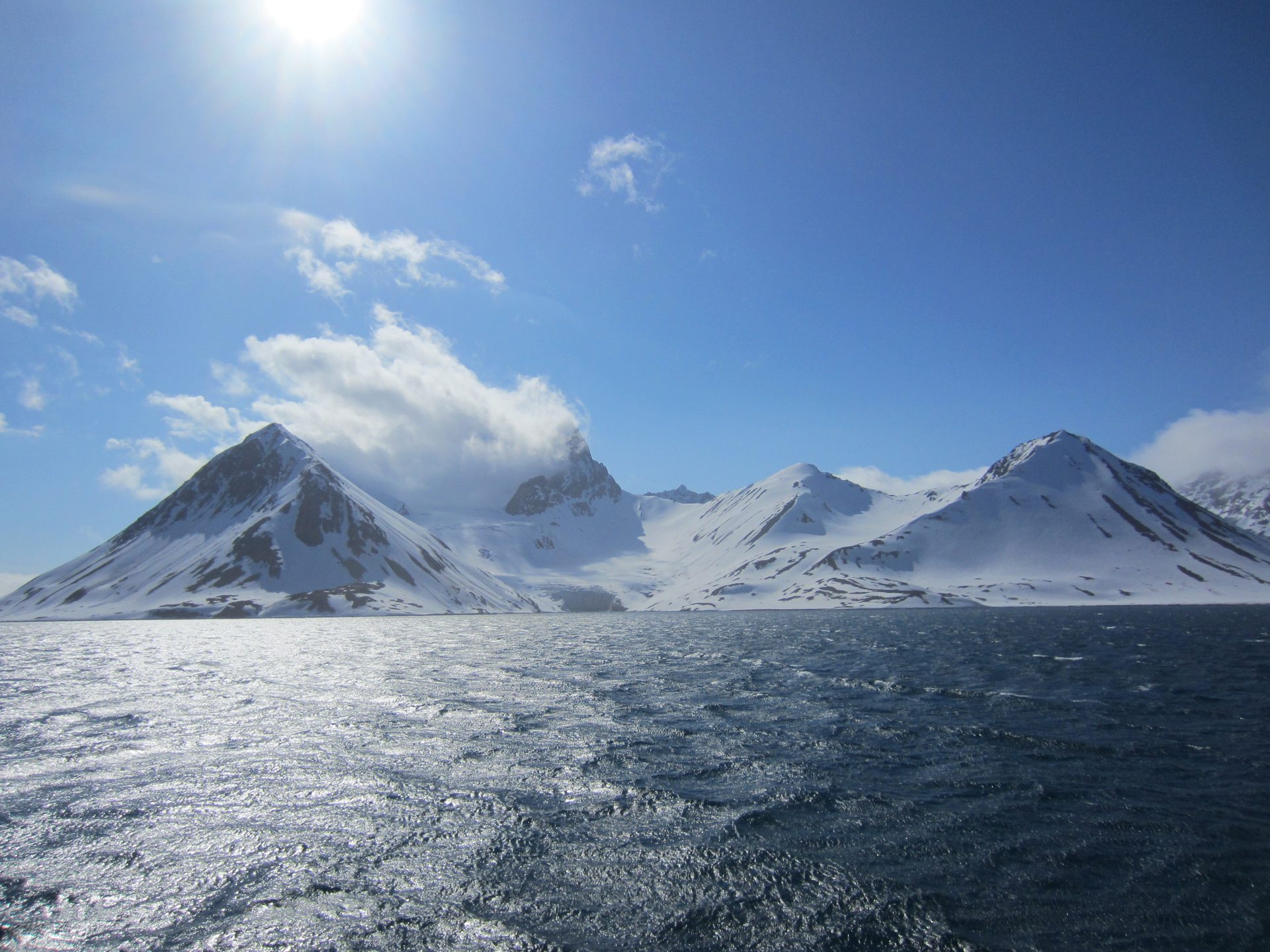
Above: Low Arctic sun over a Svalbard fjord with floating sea ice and snow-streaked mountains..
Ready to put it into practice?
Check tonight's honest forecast for free, or plan a journey to where the aurora lives.