Aurora planning · 4 min read · Updated July 2026
Is 2027 Still Solar Maximum?
What the latest solar-cycle forecasts mean for 2027 northern lights planning — and whether the peak is behind us or still ahead
Solar Cycle 25 may be nearing its peak, but near-peak activity can last years. 2027 is still worth planning around.
People planning a trip to see the northern lights tend to focus on one question: “When is solar maximum?” And it is easy to see why — the more active the Sun is, the stronger and more frequent the auroral displays, and the better your chances of seeing something spectacular from a ship or a shore.
Here is what the current forecasts say about Solar Cycle 25 and 2027, in plain English.
What is a solar cycle?
The Sun runs on roughly an eleven-year cycle of activity. At the low point — the “solar minimum” — there are few sunspots, few flares, and the aurora appears only occasionally, mostly at very high latitudes. At the high point — the “solar maximum” — sunspots are frequent, flares are common, and the aurora is both more intense and more frequent, visible at lower latitudes than usual.
The Sun is currently in Solar Cycle 25 — the twenty-fifth cycle since scientists began tracking them systematically. We are near the peak of this cycle, which means the Sun is more active now than it was a few years ago, and will likely remain active for a while.
Where we are now
As of early 2026, Solar Cycle 25 is near or at its peak. Here is what that means:
- More sunspots than in the previous cycle, and larger ones.
- More frequent flares and coronal mass ejections (CMEs) — the eruptions that drive geomagnetic storms.
- Stronger auroral displays than in quiet years, with the Northern Lights visible more often and more intensely than they have been in the past decade.
This is not the most active cycle in recorded history — Solar Cycle 24 was similar in strength — but it is definitely above average, which means 2027 may still be near the peak.
What about 2027?
The peak of Solar Cycle 25 is generally expected to be reached between late 2024 and mid-2025, though exact timing is uncertain. [JO-VERIFY: Is this still accurate as of July 2026? Any updates from NOAA or space weather forecasters? Solar Cycle 25 timing may have shifted.] The important thing to understand is that “peak” does not mean “the last day of activity.” The peak is a window, not a point.
Here is what that means for 2027:
- Solar activity does not drop to zero when the peak passes. After the peak, activity gradually declines — but over months or years, not days. So even if the peak was early 2025, 2027 may still see strong activity by the early part of the year.
- Aurora displays at 2027 levels will remain strong. Even if activity is slowly declining, the displays in 2027 will still be significantly above the quiet years of the cycle.
- There is no need to rush. You do not need to book a trip “as soon as possible” because the solar maximum ends. The window is wide enough that 2027 — and probably 2028 too — are still good years.
But I should flag this: the exact timing of the peak is uncertain.[JO-VERIFY: Solar Cycle 25 peak timing — is late 2024/2025 still accurate as of late June 2026? Any updates from NOAA or.space weather forecasting?]“
Why 2027 may actually be a good year
Even if the peak has passed, here is why 2027 could still be a strong year for aurora:
- Solar activity declines gradually. The Sun does not suddenly stop being active at the peak. It tapers off over months.
- Cycle 26 will not begin for several more years. We are still in Cycle 25 through at least 2027.
- Near-peak activity is still far above the quiet years. The difference between the peak and the low point is dramatic. Even a “declining” near-peak year is significantly stronger than the quiet years.
In short: 2027 is likely to remain a strong year for aurora, even if it is not the absolute peak of the cycle.
What this means for your trip
If you are planning a northern-lights trip in 2027, here is the bottom line:
- Book now if you want peak months. December and February are popular. If you want those dates, book early (by September or October 2026) to secure availability.
- October and November are also strong. These months are part of the aurora season and, combined with 2027’s solar activity, are unlikely to disappoint.
- The solar maximum is not something to miss. This is the peak of an eleven-year cycle. The next cycle (Cycle 26) is not expected to begin for several more years, so the current window is important.
The honest bottom line
- Cycle 25 is near its peak as of 2026. But “near peak” is a window, not a single date.
- 2027 is likely still a strong year for aurora, even if activity slowly declines from the peak.
- Solar maximum does not guarantee the northern lights — you still need dark, clear skies.
- 2027 is worth planning around. If you want to see the aurora during Solar Cycle 25’s peak — and we are still in it — that is a good reason to plan early.
For help planning a trip around aurora forecasts and 2027’s solar maximum, Jo plans aurora journeys to Norway. True Frontier In Action does not book travel — but Jo does, and she plans aurora journeys with ATOL protection.
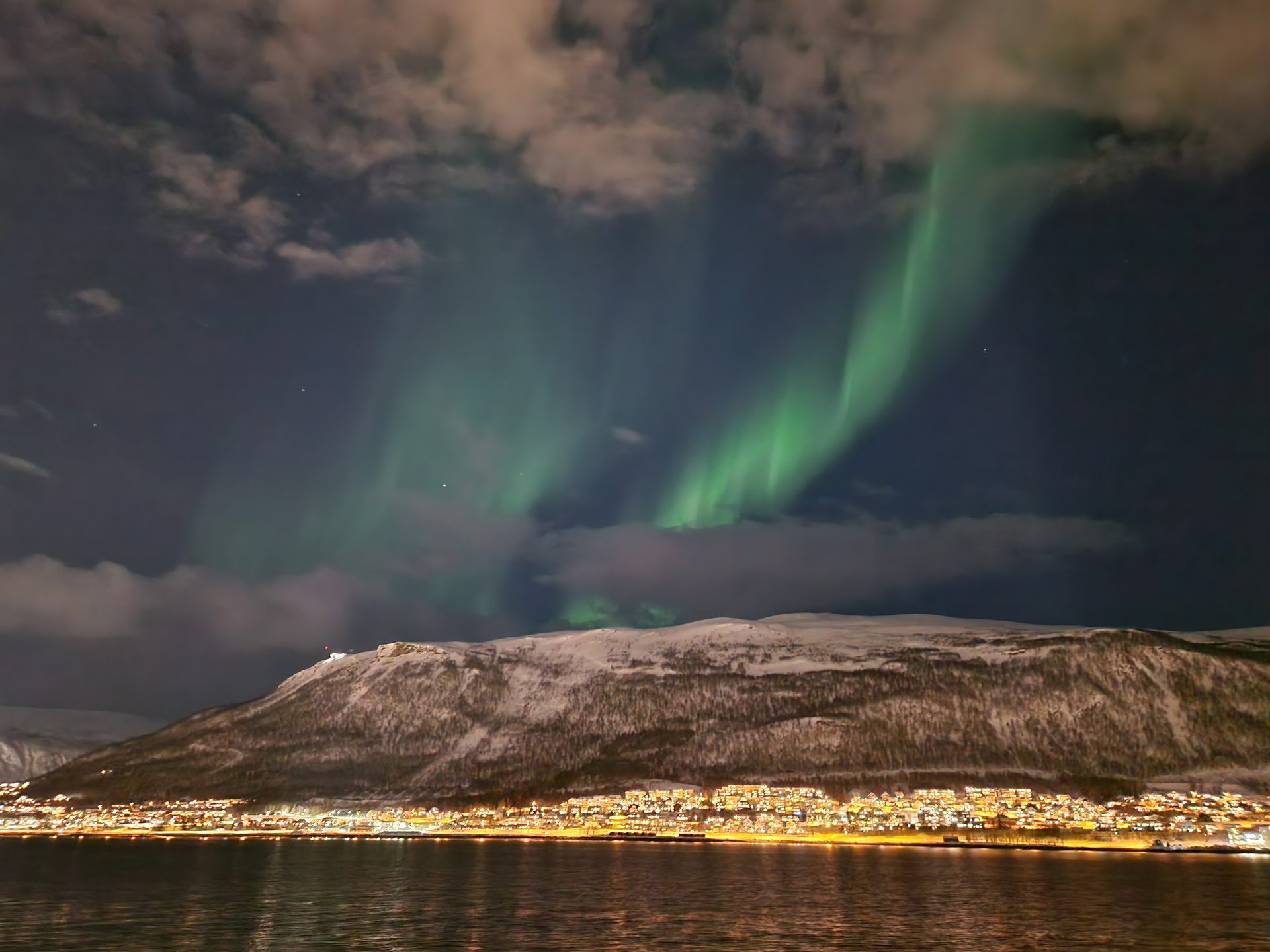
Above: Aurora over a Norwegian fjord at twilight..
Ready to put it into practice?
Check tonight's honest forecast for free, or plan a journey to where the aurora lives.